
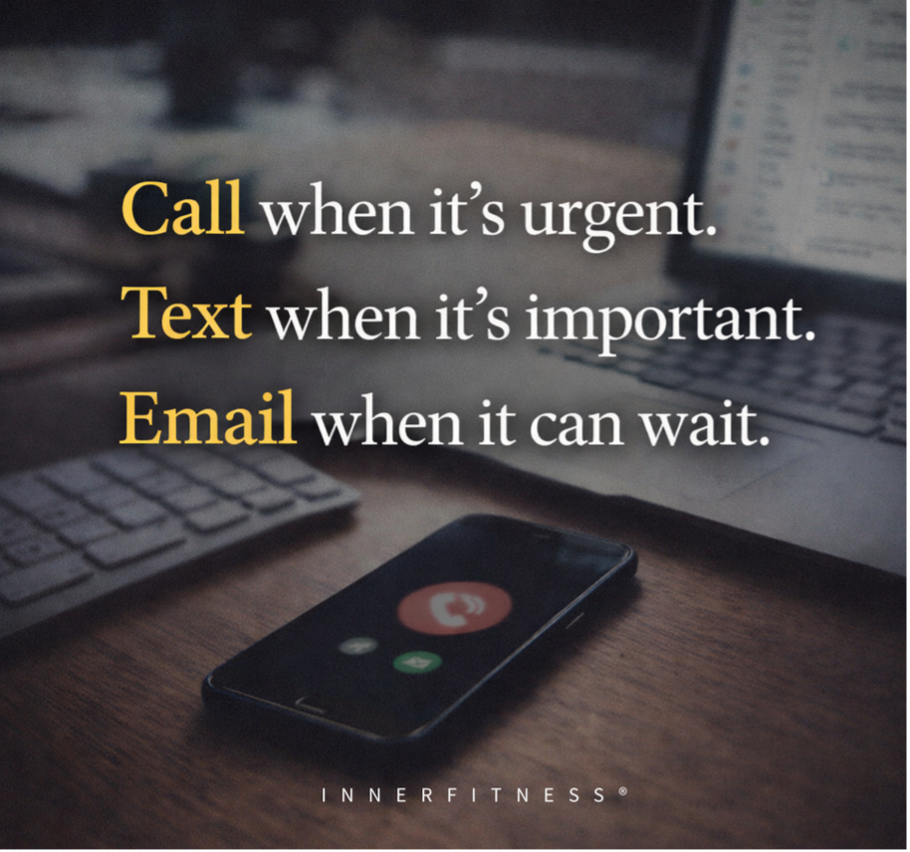
Call When It’s Urgent. Text When It’s Important. Email When It Can Wait.
- Blog, Life, Mental, Wellness
- By NordineZouareg
Simple—but powerful.
In a world of constant communication, clarity is often the first thing we lose.
The Noise of Modern Communication
We live in a time when communication is instant, constant, and everywhere. Your phone vibrates. Your watch alerts you. Your inbox fills. Your messages stack up.
Calls. Texts. Emails. Notifications.
They are all competing for your attention. Over time, everything begins to feel urgent—but not everything is.
When Everything Is Urgent, Nothing Is
When we communicate without intention, urgency loses its meaning. A casual question becomes a phone call. A noncritical update becomes a “quick” interruption. A thought that could wait suddenly demands immediate attention.
Slowly, your focus becomes fragmented. You are no longer concentrating—you are reacting.
Reacting to every ping, every buzz, and every notification.
Reaction is not productivity. It is distraction.
Communication Is More Than Delivery
Most people think communication is only about what they say. But how you communicate—and when—is equally important.
The method you choose determines how your message is received. It sets the tone, signals its importance, and shapes the recipient’s expectations.
Every time you choose a communication channel, you are sending two messages: the content itself and its level of urgency.
The Hierarchy of Communication
Not all forms of communication carry the same weight. Understanding the purpose of each one can mean the difference between clarity and chaos.
The Call: Immediate Presence
A phone call interrupts. It demands attention now.
It says, “This cannot wait.”
When you call someone, you are asking that person to stop what they are doing and respond immediately. That is a powerful request, and it should be made intentionally.
Calls are appropriate for:
- Emergencies
- Urgent decisions
- Time-sensitive situations
- Moments requiring immediate clarity
When calls are overused, they lose their meaning. When used correctly, they create decisive action.
The Text: Important but Respectful
A text is direct but less intrusive. It communicates importance without necessarily demanding an immediate interruption.
It says, “This matters, but respond when you can.”
Texts are ideal for:
- Quick updates
- Important reminders
- Coordination
- Time-relevant but nonurgent matters
A well-used text balances importance with respect for the other person’s time and space. It allows communication without unnecessary disruption.
The Email: Thoughtful and Nonurgent
Email creates space. It gives the recipient time to reflect, review details, and respond clearly.
It says, “This is relevant, but it is not urgent.”
Emails are appropriate for:
- Detailed communication
- Documentation
- Nonurgent updates
- Structured conversations
Email is not designed to demand an immediate response. When used correctly, it reduces pressure and improves clarity.
The Cost of Miscommunication
When communication channels are misused, something subtle but damaging happens: clarity disappears.
A nonurgent matter creates unnecessary stress. An avoidable call interrupts concentration. A flood of messages produces overwhelm.
Over time, trust begins to erode. People stop responding quickly. They begin filtering or ignoring messages. Eventually, they lose their sensitivity to genuine urgency because everything has been made to feel equally important.
Communication Is an Expression of Respect
This is not only about efficiency. It is about respect.
Respect for your time. Respect for other people’s time. Respect for attention.
Attention is one of the most valuable resources we possess. Every time you interrupt someone unnecessarily, you are spending that person’s attention without permission.
Intentional communication protects that resource.
The Discipline of Clarity
Clarity requires discipline and awareness.
Before communicating, pause and ask yourself:
Is this urgent? Is it important? Or can it wait?
Then choose the appropriate channel.
That small moment of awareness can change everything.
Reactive vs. Intentional Communication
Most communication today is reactive. People respond immediately—not because it is necessary, but because it has become habitual.
They send messages without considering their impact. They call without thinking about the interruption. They respond without determining what truly deserves priority.
Intentional communication is different. It is deliberate, thoughtful, and aligned with the importance of the message.
Communication Shapes Culture
Whether in your personal relationships or in business, communication creates culture.
If everything is urgent, people live in a state of stress. If nothing is clear, people operate in confusion. When communication is intentional, people experience greater clarity, trust, and calm.
Leaders, especially, set the tone. How you communicate teaches others how to communicate with you.
The Power of Simplicity
There is tremendous power in simplicity:
Call when it’s urgent. Text when it’s important. Email when it can wait.
The principle is not complicated, but following it requires discipline—and discipline creates order.
Reclaiming Your Focus
When communication becomes intentional, something shifts.
Your day becomes calmer. Your attention becomes sharper. Your decisions become clearer.
You are no longer reacting to noise. You are operating with purpose.
Imagine urgent matters being handled immediately, important matters being communicated clearly, and nonurgent matters being organized without pressure.
No confusion. No unnecessary interruptions. No wasted attention.
Just clarity.
A Call to Action
Today, pay attention to how you communicate.
Before you reach for your phone, ask:
Is this urgent? Is it important? Or can it wait?
Then choose the right channel.
Practice this consistently. It will change not only how you communicate, but also how you think, lead, and live.
Final Reflection
Call when it’s urgent. Text when it’s important. Email when it can wait.
When everything is treated as urgent, nothing truly is. When communication becomes intentional, life becomes simpler, clearer, and more powerful.
Your message gains value. Your time gains structure. Your attention becomes more focused. And your presence becomes more meaningful.
Continue Your No-Limits Journey
Nordine Zouareg
THE NO-LIMITS LIFE™
InnerFitness® — Transforming Lives from the Inside Out™
Pre-0rder The No-Limits Life Book
Be a part of the Beta version of the InnerFitness® App
Facebook
Twitter
LinkedIn
WhatsApp
Email