
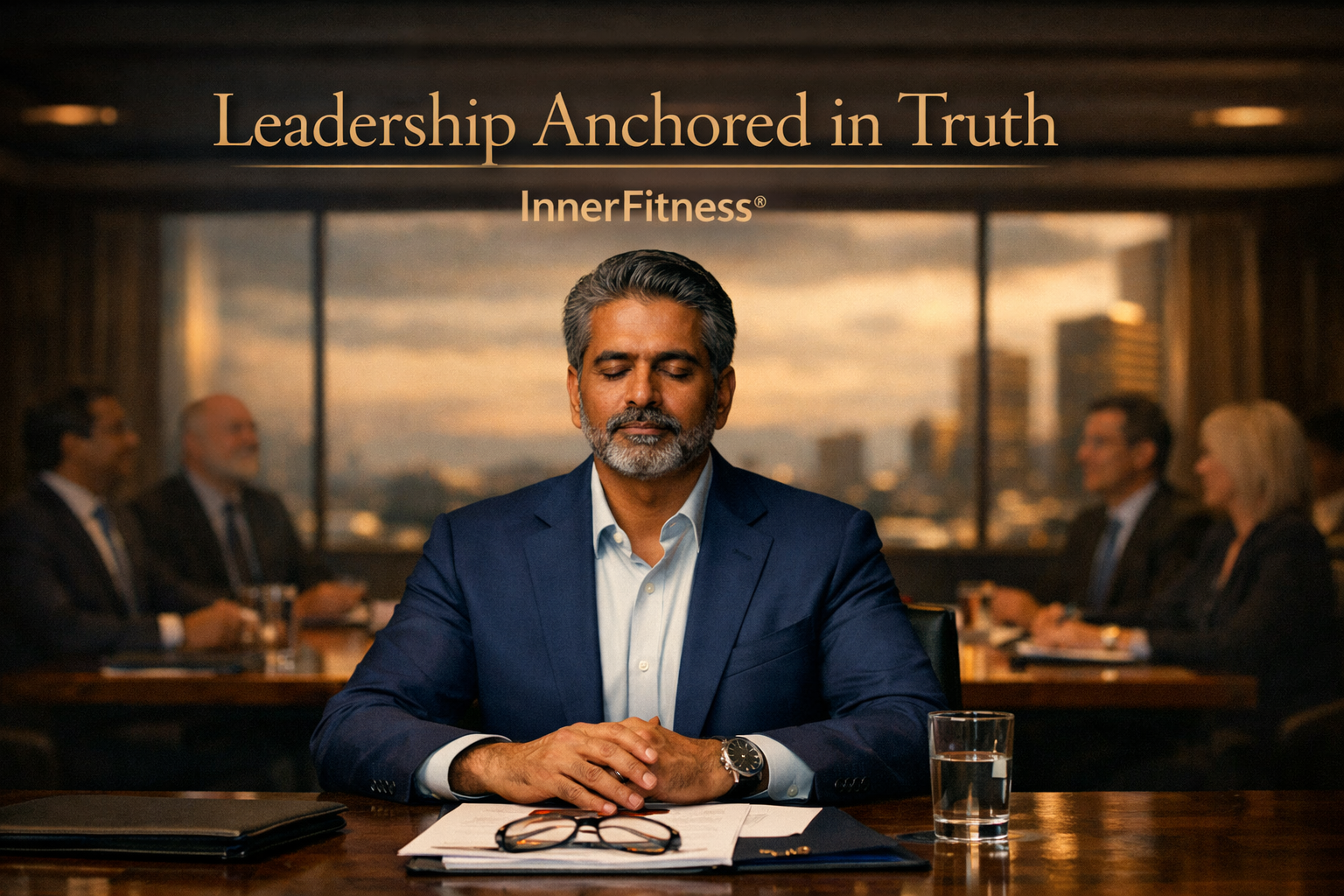
An effective leader is not the loudest voice in the room— it is the calmest mind armed with facts, evidence, and the humility to follow truth over Ego.
Not on intimidation. Not on emotional theatrics. Not on Ego disguised as confidence.
True leadership is built on clarity.
And clarity requires truth.
The strongest leaders are rarely the loudest people in the room.
They are often the calmest.
The most observant. The most disciplined emotionally. The most committed to reality rather than personal identity.
Because leadership is not performance.
Leadership is responsibility.
And responsibility requires the courage to see things as they are—not as the Ego wishes them to be.
The Difference Between Influence and Authority
Many people confuse authority with leadership.
Authority can be given through titles.
Leadership cannot.
A title may force temporary compliance.
But trust is earned differently.
People do not genuinely follow someone because they speak loudly, dominate conversations, or project certainty aggressively.
People trust leaders who demonstrate grounded thinking, emotional stability, discernment, and alignment with truth.
Because truth creates psychological safety.
And psychological safety creates trust.
Facts Create Stability
Facts matter because facts stabilize perception.
In emotionally charged environments, people often react impulsively.
Fear rises. Assumptions spread. Emotions distort interpretation.
Without facts, confusion expands rapidly.
This is why mature leaders seek clarity before reaction.
They understand that assumptions are dangerous foundations for decision-making.
Facts remove illusion.
Evidence grounds reality.
And reality protects organizations, relationships, families, and communities from emotional chaos disguised as certainty.
Emotional Leadership Is Dangerous
Emotion has value.
Compassion matters. Empathy matters. Human connection matters.
But leadership driven entirely by emotion becomes unstable.
Emotion changes quickly.
Fear intensifies perception.
Anger narrows perspective.
Pride resists correction.
And when leaders make decisions from emotional reactivity rather than grounded evidence, unnecessary damage often follows.
This is how organizations collapse.
Relationships deteriorate.
Teams lose trust.
Cultures become toxic.
Not because emotion exists—But because emotion replaced truth.
Confidence Without Accuracy Is Fragile
Some leaders project confidence masterfully.
They speak with certainty.
Move with authority.
Appear convincing.
But confidence alone is not wisdom.
And certainty alone is not truth.
A confident leader disconnected from evidence eventually creates instability because reality always exposes leadership built on illusion.
This is why mature leadership requires more than confidence.
It requires accuracy.
The Ego’s Relationship With Leadership
The Ego desperately wants leadership to become identity.
It wants to be admired.
Validated.
Protected from criticism.
Seen as always right.
And this creates one of the greatest dangers in leadership:
The inability to separate truth from personal pride.
Weak leaders protect identity.
Strong leaders protect reality.
Weak leaders defend their image.
Strong leaders defend truth—even when truth is uncomfortable.
The Humility of Real Leadership
One of the clearest signs of strong leadership is humility.
Not weakness.
Humility.
The willingness to say: “I may be wrong.” “I need more information.” “The evidence changed.” “The facts say otherwise.” “I misjudged the situation.”
The Ego experiences these admissions as threats.
Wisdom experiences them as growth.
Because leadership is not about appearing infallible.
It is about remaining aligned with reality.
Why Evidence Matters
Evidence protects leadership from emotional distortion.
It creates accountability.
It forces leaders to observe before reacting.
To investigate before accusing.
To understand before concluding.
Without evidence, people often lead through projection.
They assume motives. Interpret emotionally. React impulsively.
And emotional assumptions create unnecessary suffering.
Especially in leadership roles.
The Leader Who Understands the Room
The strongest leaders are not necessarily charismatic.
They are perceptive.
They understand:
- Emotional dynamics
- Human behavior
- Patterns
- Timing
- Context
- Consequences
They observe carefully.
They listen deeply.
And they recognize that truth is often more nuanced than immediate emotional reaction allows.
This depth creates wisdom.
Observation Before Judgment
Emotion reacts quickly.
Wisdom observes first.
This is one of the defining characteristics of effective leadership.
The ability to pause before conclusion.
To gather information.
To assess evidence.
To separate emotional interpretation from objective reality.
Because many problems become worse when leaders react prematurely.
Fear-Based Leadership
Some leaders attempt to control through fear.
Pressure. Intimidation. Emotional unpredictability.
And while fear can produce short-term compliance, it destroys long-term trust.
People become emotionally guarded.
Creativity decreases.
Honesty disappears.
Communication weakens.
Because psychologically unsafe environments force people into survival mode.
And survival mode weakens performance.
Truth-Based Leadership
Truth-based leadership creates the opposite environment.
People feel safer speaking honestly.
Mistakes become opportunities for learning rather than humiliation.
Communication becomes clearer.
Trust deepens.
And teams become stronger because reality—not emotional volatility—guides decisions.
This is why evidence-based leadership creates healthier cultures.
Because people feel protected by fairness instead of controlled by unpredictability.
Intuition Must Be Grounded
Intuition matters.
Experienced leaders often sense patterns before they become obvious.
But intuition without verification becomes dangerous.
Because intuition can also become projection.
Bias.
Fear.
Emotional assumption.
This is why mature leaders balance intuition with evidence simultaneously.
They listen internally—But verify externally.
Discernment Is Leadership
Leadership requires discernment.
The ability to distinguish:
- Facts from assumptions
- Truth from emotional narrative
- Confidence from wisdom
- Urgency from panic
- Appearance from reality
Discernment prevents unnecessary destruction.
And destruction often begins when leaders stop questioning themselves.
Reality Does Not Care About Ego
Reality does not adjust itself to preserve personal pride.
Facts remain facts whether the Ego likes them or not.
This is difficult for emotionally immature leaders.
Because emotionally immature leadership interprets disagreement as disrespect.
Correction as attack.
Evidence as threat.
But emotionally mature leadership understands something deeper:
Truth is not personal.
It is informational.
And information strengthens leadership when leaders are humble enough to receive it.
Leadership and Emotional Regulation
A reactive leader creates reactive environments.
An emotionally grounded leader creates stability.
This is why emotional regulation is essential in leadership.
Not emotional suppression—Regulation.
The ability to remain calm enough to think clearly under pressure.
To assess situations without emotional contamination.
Because panic distorts perception.
Fear narrows thinking.
Anger reduces objectivity.
And leadership requires clear perception.
Accountability Creates Trust
People trust accountable leaders.
Leaders who:
- Admit mistakes
- Adjust when evidence changes
- Prioritize truth over image
- Remain open to feedback
Because accountability demonstrates psychological maturity.
It communicates: “I care more about reality than my pride.”
And that creates trust.
The Cost of Ego-Driven Leadership
Ego-driven leadership eventually creates:
- Instability
- Resentment
- Confusion
- Emotional exhaustion
- Broken communication
- Fractured culture
Because the Ego prioritizes self-protection over truth.
It manipulates information.
Rejects criticism.
Distorts reality to preserve identity.
And eventually reality collapses the illusion.
Always.
Calm Minds Lead Better
The best leaders are rarely emotionally chaotic.
They are centered.
Grounded.
Able to remain steady during uncertainty.
This calmness does not come from perfection.
It comes from alignment.
From valuing truth more than emotional reaction.
And people instinctively trust grounded leadership.
Because stability creates safety.
Leadership Is Service
Leadership is not domination.
It is service.
Service to:
- Truth
- Clarity
- Growth
- People
- Responsibility
The leader’s role is not to protect their Ego.
It is to protect reality from distortion.
And that requires courage.
Inner Fitness and Leadership
This is deeply connected to Inner Fitness.
Because effective leadership begins internally.
A fragmented inner world cannot create stable external leadership.
Leaders must strengthen:
- Emotional awareness
- Self-regulation
- Discernment
- Humility
- Clarity
Before they can guide others responsibly.
Because leadership always amplifies the inner condition of the person leading.
A Call to Action
Before reacting emotionally today, pause.
Ask: “What are the facts?” “What evidence supports this?” “Am I reacting—or observing?” “Is my Ego involved?” “What serves truth here?”
Then lead from clarity rather than emotional noise.
Because leadership rooted in reality creates trust.
And trust creates lasting impact.
Final Reflection
An effective leader is the one who’s armed with facts and evidence. Not because leadership should become cold or robotic—But because truth protects people from emotional chaos disguised as certainty.
Facts create stability.
Evidence creates credibility.
Truth creates trust.
And the leader who consistently aligns wisdom with facts, intuition with evidence, and confidence with humility becomes someone others can trust—even during uncertainty.
Because leadership is not measured by how forcefully you speak.
It is measured by how responsibly you think.
And the leaders who serve truth rather than Ego become the ones capable of creating real impact in the lives of others.
— Nordine Zouareg | InnerFitness® | The No-Limits Life® — Transforming Lives from the Inside Out™
Disclaimer
This article is meant to inspire reflection and promote wellbeing. It is not a substitute for professional medical or mental health advice. If you or someone you know is struggling with insomnia, stress, or emotional distress, please seek help from a qualified healthcare or mental health professional. Remember: asking for help is an act of courage and self-care.
Pre-0rder The No-Limits Life Book
Be a part of the Beta version of the InnerFitness® App